
Thinking about straightening your teeth but unsure whether to choose Invisalign or traditional braces? The question’s been a long lasting concern for cosmetic and health reasons alike; whether you’re dissatisfied with your smile, or you’ve had issues with overcrowding in the mouth . Each option has its advantages and limitations, and the right choice really depends on your individual needs, goals, and lifestyle.

As dentists, we’ve helped many patients through this decision, and the most successful outcomes always start with honest conversations, a proper diagnosis, and a clear understanding of your options. Below, we’ve broken down the key differences between Invisalign and braces to help guide you.

What is Invisalign?

Image2
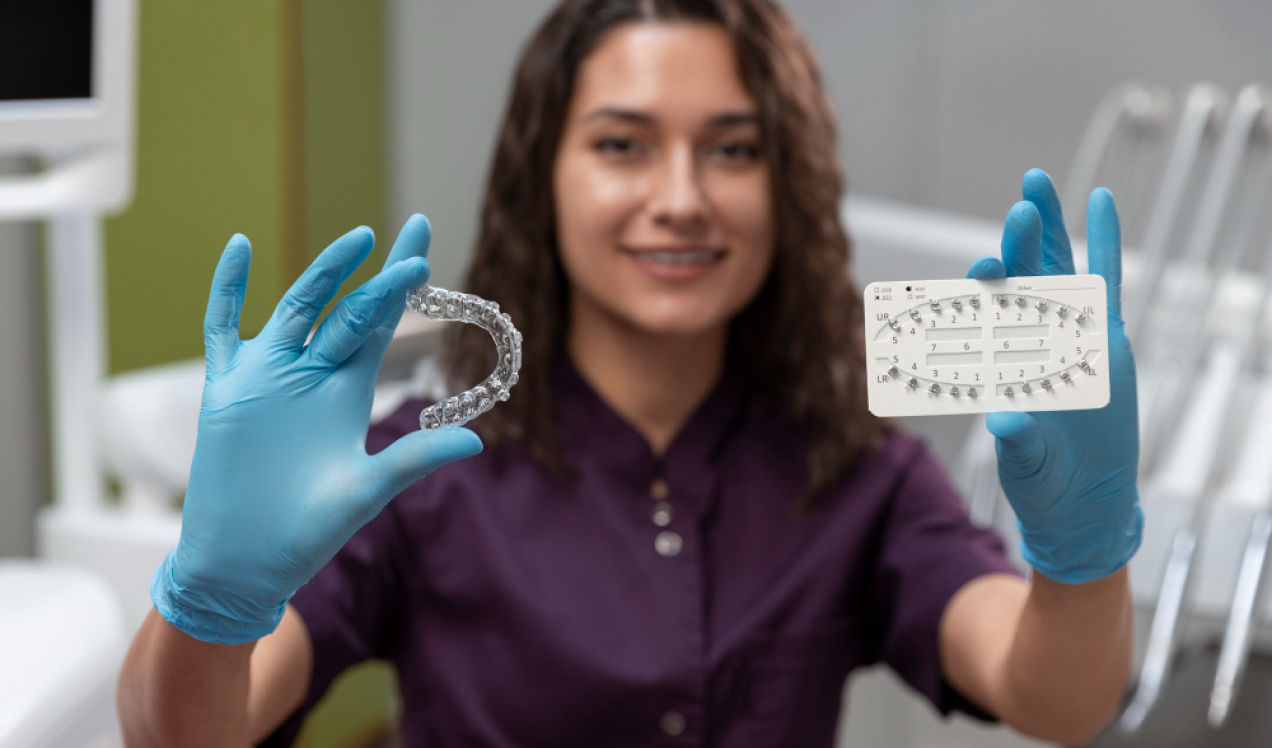
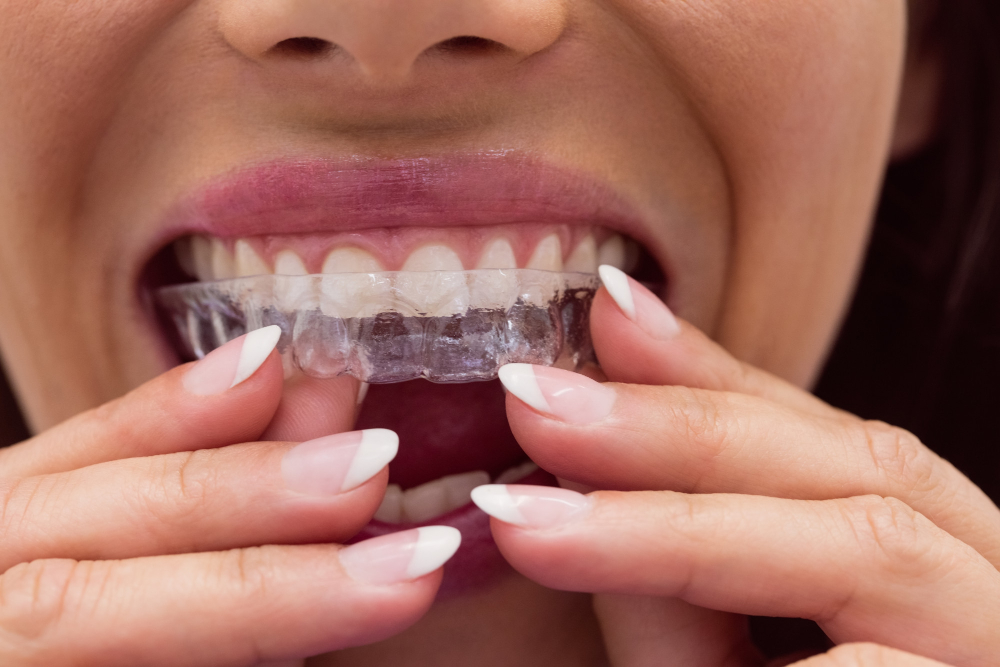
Invisalign is a clear aligner system designed to move your teeth gradually into the right position. It involves a series of custom-made, removable trays that fit snugly over your teeth.

  • Made from smooth, BPA-free plastic
  • Nearly invisible when worn
  • Changed every 1–2 weeks to guide teeth movement
  • Worn 20 to 22 hours a day
  • Removed for eating, drinking, brushing, and flossing

Treatment duration typically ranges from 6 to 18 months, depending on the complexity of your case.

Invisalign is ideal for:

  • Mild to moderate crowding
  • Gaps between teeth
  • Minor bite corrections

What are dental braces?

Image1
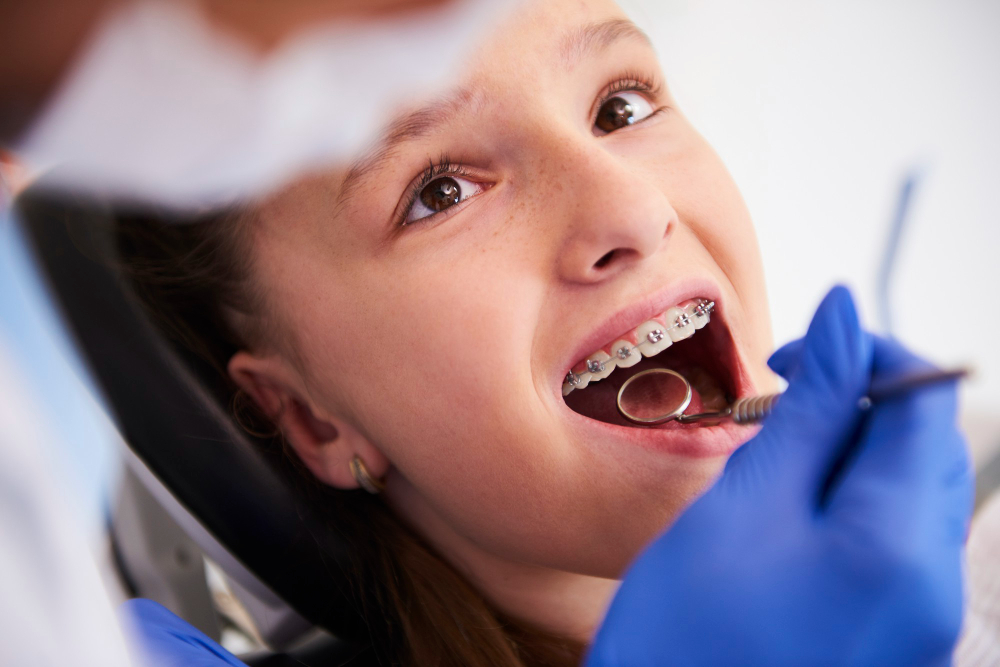
Braces are one of the most established and effective ways to straighten teeth. They’re a fixed orthodontic treatment that works by applying continuous, gentle pressure to move your teeth into better alignment over time.

Metal braces, stereotypically how we imagine them in pop culture, use small brackets, which are bonded to each tooth, to landmark each member to its ideal position and anchor them there. A thin archwire thenthreads through eachbracket to subtly enforce this position by applying pressure on the teeth, restricting movement that deviates from this anchoring. The wire is adjusted at regular intervals to guide your teeth better into these ideal positions. Braces can correct crowding, close gaps, align bites, and improve overall dental function by allowing teeth shape alignment to be as ergonomic as possible.

Because braces are fixed to your teeth, you can’t remove them until treatment is complete, a key advantage for patients who may struggle with compliance. Most people wear braces for 12 to 18 months, although more complex cases may take a bit longer.

Types of braces available

There’s more than one type of brace to choose from. While traditional metal braces are still widely used, newer options offer a more discreet look without compromising effectiveness.
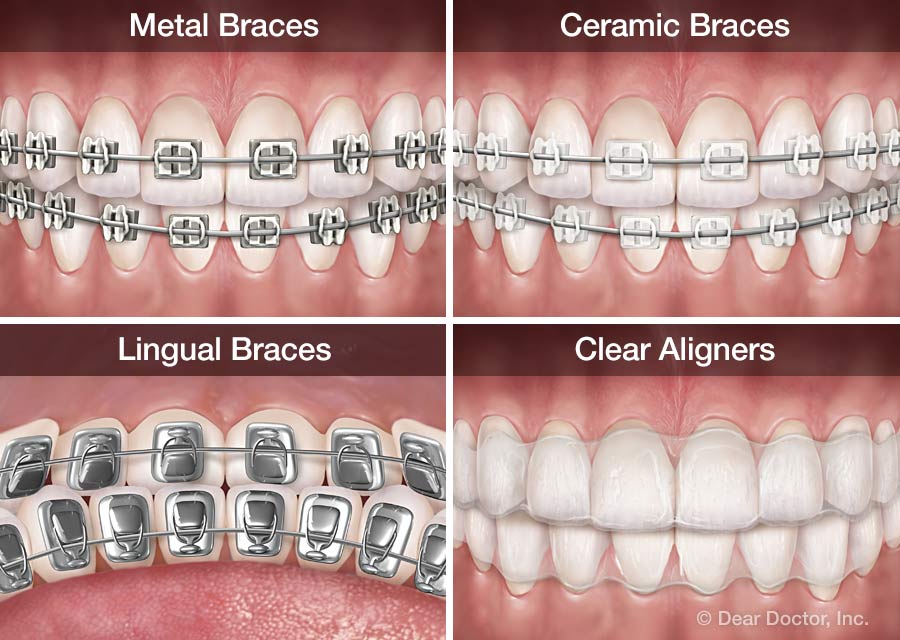
Image6
Meet the Braces Trio – you can choose from metal, ceramic, or lingual braces, each designed to suit different needs and preferences.

Metal Braces

These are the classic stainless steel braces most are familiar with. They involve metal brackets and wires attached to the front of the teeth. While they’re the most visible type, they’re also highly effective and often the most cost-efficient option.

Ceramic Braces

Ceramic braces work the same way as metal braces, but the brackets are made from a tooth-coloured or clear ceramic material, helping them blend in better with your natural teeth. They’re a popular option for patients who want a less noticeable appearance while still benefiting from the strength of traditional braces.

Lingual Braces

Lingual braces are fitted to the back of your teeth (on the tongue side), making them invisible from the front. They use metal brackets and wires like traditional braces, but because they’re custom-made and trickier to fit, treatment may take a little longer and cost slightly more. These are a great option for those who are looking for the effectiveness and reliability of braces, but with maximum discretion.

Key Considerations at a Glance

Every treatment has its strengths and weaknesses. Here is a summary of the most important pros and cons to weigh when making your decision.
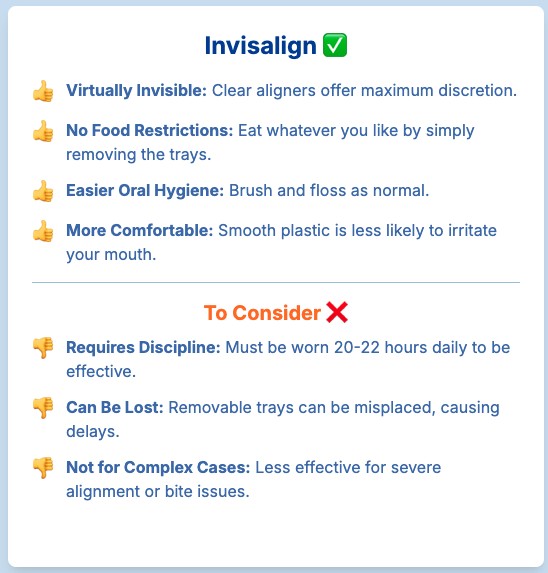

Image3Image3

The benefits of choosing Invisalign

A more subtle look

One of the most common questions we hear is, “Is Invisalign better than braces?” For many people, the standout benefit of Invisalign is how discreet it is. The clear aligners are virtually invisible when worn, making them an appealing choice for adults who want to straighten their teeth without it being obvious. Teenagers who feel self-conscious about their appearance also appreciate this subtle approach.

With Invisalign, there’s no awkward adjustment period where people notice your new braces. You can smile for photos without worrying about brackets or wires, only the gradual improvement of your smile.

Fewer unexpected problems

Because there are no brackets or wires, Invisalign wearers are far less likely to experience emergency visits due to breakages or irritation. This makes the entire treatment process more predictable and easier to manage, especially helpful for patients juggling work, school, or a busy schedule.

Less irritation to the mouth with a custom fit

The aligners are made from smooth, custom-moulded plastic, which reduces friction, cuts and rubbing against the inside of your lips and cheeks that often accompany their metal counterpart. Compared to braces, Invisalign causes fewer mouth ulcers and less soft-tissue discomfort overall. Invisalign care is also noticeably less stringent, not needing to rinse with saltwater on a consistent basis as an example.

Easier to keep teeth clean

Invisalign allows for better daily oral hygiene. Since the aligners are removable, you can brush and floss just like you normally would, without the finicky nature of navigating around brackets or wires or any special tools or techniques. This helps prevent plaque build-up and reduces the risk of decay or gum problems during treatment, and because there’s nothing fixed to your teeth, it’s easier to keep your mouth feeling fresh and clean throughout treatment.

Freedom to eat what you like

One of the biggest lifestyle advantages is the ability to remove your aligners at mealtimes. While they need to be worn for 20 to 22 hours a day, you can take them out to eat, meaning no food restrictions. There’s no need to avoid hard, chewy, or sticky foods as you would with braces. You can enjoy your usual diet with minimal disruption.

Fewer in-person visits

Invisalign treatment is digitally planned in advance. A 3D scan of your teeth is used to create your full set of aligners, and your orthodontist will advise when to switch to the next set. Since there are no adjustments needed like with braces, most patients only need to come in for brief progress checks – meaning fewer appointments and less time away from work or school.

Limitations of Invisalign: what to consider

While Invisalign offers many benefits, it’s important to understand the limitations before starting treatment. For the right candidate, it can be a highly effective and convenient option but it does require discipline and may not be suitable for everyone.

Commitment is essential

One of the biggest challenges with Invisalign is compliance. Because the aligners are removable, patients must be diligent about wearing them for at least 22 hours a day. If you frequently forget to put them back in after eating or brushing, the treatment may not progress as planned. In fact, most Invisalign setbacks are linked to inconsistent wear rather than the aligners themselves.

Managing aligners in public

Taking aligners out before eating or drinking anything (except water) can be inconvenient, especially when you’re out socially or dining in public. You’ll also need to brush your teeth before reinserting the trays to avoid trapping food particles which could lead to staining, bad breath, or tooth decay over time.

Cost considerations

Patients often ask whether Invisalign is more affordable than braces. In most cases, the cost is comparable to traditional braces, largely due to the expenses associated with the intraoral 3D scanning tech involved, and the custom manufacturing process from thereon. However, if your case requires more complex movements that Invisalign can’t achieve alone, your orthodontist might recommend combining treatment with braces which can increase the overall cost. For those considering a discreet option, lingual braces (which sit behind the teeth) are also popular, but typically more expensive than standard metal braces or Invisalign.

Continuous low-grade discomfort

While Invisalign tends to cause less soreness than braces, it delivers a more constant pressure. As each new aligner is introduced, patients may experience a few days of mild discomfort or tightness. It’s a normal part of the process but worth keeping in mind.

Risk of losing or damaging trays

Because aligners are taken out multiple times a day, there’s always a chance they could be misplaced ,especially when dining out or travelling. Lost trays may delay your progress and require replacement, which can add extra cost and time to your treatment.

Slower for certain tooth movements

In some situations particularly involving complex rotations or vertical changes, Invisalign may take longer than traditional braces to achieve the desired results. Treatment speed depends on the specific movement required, as well as how closely the patient follows the treatment plan.

Less precision in complex cases

While Invisalign is highly effective for many alignment issues, fixed braces offer greater control over detailed or difficult tooth movements. Some patients may require a brief round of finishing treatment with braces to refine the final result.

Not always convenient when eating out

Social settings can pose a challenge for Invisalign wearers. Removing the aligners discreetly, storing them safely, and brushing your teeth before reinserting them isn’t always practical ,especially in restaurants or public spaces. Maintaining proper hygiene during meals is essential to prevent plaque buildup and aligner staining.

Effectiveness in Complex Cases

While Invisalign works very well for mild to moderate alignment issues, it’s not as effective as braces for complex orthodontic cases. Traditional braces offer greater control over tooth movement, allowing your orthodontist to make precise adjustments that may be difficult to achieve with aligners alone.

If your treatment involves significant crowding, bite correction, or complex tooth rotations, braces are generally the more reliable and efficient option. Your orthodontist can assess your specific needs and recommend the approach that will deliver the best and most predictable results.

The advantages of braces

Traditional braces including discreet options like ceramic and lingual braces remain one of the most versatile and effective orthodontic treatments. Here’s why braces continue to be a popular choice for patients with a wide range of needs.

SuUitable for all treatment types

Braces can treat almost any orthodontic issue, from crowding and spacing to bite correction and jaw alignment. They work by applying steady, controlled force using brackets and archwires, making them one of the most powerful tools for comprehensive correction.

Continuous force without relying on compliance

Because braces are fixed to your teeth, they’re always working. There’s no need to remember to wear them or risk delaying treatment due to forgetfulness, which makes them ideal for patients who may not manage removable aligners consistently.

Greater control for complex tooth movement

Braces allow your orthodontist to make detailed, hands-on adjustments. They’re especially effective for complex movements such as root repositioning, torque control, and significant rotations, offering more precision than removable aligners.

Predictable treatment timelines

Braces offer a more consistent schedule, as they’re not dependent on patient wear time. This makes it easier for your orthodontist to predict treatment duration as long as appointments are kept and good oral hygiene is maintained.

Easier finishing and detailing

Refinements are often easier with braces. Your orthodontist can make direct adjustments in real time without needing additional trays or waiting on lab-made appliances, which allows for greater accuracy in the finishing stages.

Aesthetic options are available

Modern braces come in a variety of styles to suit different preferences. Ceramic braces blend with the natural tooth colour for a more discreet appearance, while lingual braces are fitted behind the teeth and hidden from view.

Often faster for certain corrections

For specific types of tooth movement, such as closing gaps or shifting teeth over greater distances, braces can deliver results faster than Invisalign. Their fixed nature and constant force contribute to treatment efficiency.

Durable and hard to lose

Since braces are bonded to your teeth, there’s no risk of losing them a practical advantage for busy patients or younger individuals who might misplace removable aligners. They’re always working, with no interruptions.

The disadvantages of braces

While braces are highly effective and widely used, they do come with a few drawbacks that are worth considering when deciding on your orthodontic treatment.

Appearance of braces

One of the most common concerns about braces is how visible they are particularly the traditional metal style. Some patients feel self-conscious in social or professional settings, especially during the early stages of treatment. Even though ceramic and lingual options are available, they can still be noticeable to varying degrees and may come with trade-offs like increased cost or speech changes.

Oral hygiene can be more challenging

Brushing and flossing require extra care when wearing braces. Food and plaque can easily get trapped around brackets and wires, increasing the risk of staining, decay, and gum problems if not properly cleaned. Patients need to follow their orthodontist’s instructions closely to maintain good oral hygiene during treatment.

Food restrictions and care with eating

Braces come with a list of foods to avoid. Hard, sticky, or chewy foods such as nuts, popcorn, chewing gum, or caramel can break brackets or bend wires. Any damage to the appliance can delay treatment progress and may require urgent repair. This means some adjustments to your diet and food preparation habits are necessary throughout the treatment period.

More frequent appointments

Braces need to be checked and adjusted regularly, usually every 4 to 6 weeks. These visits allow your orthodontist to make necessary changes to the archwires to keep your treatment on track. While these appointments are typically short, they are more frequent compared to Invisalign check-ups, which are usually every 6 to 8 weeks and often less involved.

Risk of staining around brackets

If oral hygiene is not maintained during treatment, the areas around the brackets may develop white spot lesions early signs of enamel demineralisation. Once the braces are removed, these spots can remain visible, creating uneven colour across the teeth. This is why daily brushing and flossing are so important with braces.

Dietary limitations and inconvenience

Having to avoid certain foods can be frustrating and limit spontaneity when eating out or snacking. Patients often need to cut food into smaller pieces, avoid biting into hard items, and think twice before choosing meals all of which can feel restrictive during longer treatments.

Adjustments can cause discomfort

Every time the braces are tightened or adjusted, you may experience some soreness or tenderness for a few days. While this is a normal part of tooth movement, it can be uncomfortable and affect your ability to eat or speak easily in the short term.


Choosing the right treatment for you

There’s no one-size-fits-all answer when it comes to orthodontic care. The best option depends on your dental needs, treatment goals, lifestyle, and personal preferences. Take the time to weigh up the pros and cons of both Invisalign and braces, and think about what matters most to you, whether that’s appearance, convenience, comfort, or treatment efficiency.

And don’t hesitate to ask questions. Understanding your options is key to making an informed decision you’ll feel confident about.

Considering an Invisalign Alternative? Discover Angel Aligners​


Both Invisalign and Angel Aligners deliver discreet, comfortable teeth straightening without metal braces, but Angel Aligners stand out for several clear reasons. At Gisborne Family Dental, we choose Angel Aligners because they offer cutting-edge technology with their unique “7+3” protocol of alternating soft and hard trays, meaning patients experience less discomfort while potentially achieving faster results. The trays are ultra-thin and stain-resistant, staying nearly invisible throughout treatment.

We value Angel Aligners for letting our customers enjoy a modern, flexible orthodontic experience with fewer disruptions to daily life. Angel Aligners are often more affordable, giving more people access to high-quality care without sacrificing effectiveness. By choosing Angel Aligners, we’re able to provide our patients with a smooth, efficient journey toward a better smile – one that’s comfortable, budget-friendly, and easy to fit into busy routines. Our commitment is always to what’s best for you: advanced results, greater comfort, and real value.

Invisalign vs Angel Aligners

Feature

Invisalign

Angel Aligners

Brand Recognition

Global leader, widely trusted

Rapidly growing, popular in Australia

Material

SmartTrack™ plastic, durable

Ultra-thin, stain-resistant trays

Protocol

Change trays every 1–2 weeks

“7+3” protocol: alternate soft & hard trays

Comfort

Smooth, custom-fit trays; less soreness than metal braces

Increased comfort from soft tray rotation

Treatment Speed

Effective for mild to complex cases, average pace

Often faster for mild/moderate cases

Control Over Complex Cases

Superior for complex movements

Best for mild to moderate corrections

Appearance

Nearly invisible when worn

Even thinner & more discreet

Stain Resistance

Resistant, but some risk with colored foods/drinks

Highly stain-resistant, designed for low visibility

Cost

Usually higher, premium brand

Usually more affordable

Check-ups

Regular visits and tray changes

Often fewer in-person visits needed

Accessibility

Widely available worldwide

Increasingly available in Australia

Not sure which path to take?​


That’s completely normal and it’s why we’re here.

At Gisborne Family Dental, we take the time to listen, explain, and guide you through every step of your orthodontic journey. Whether you’re leaning towards Invisalign or considering braces, we’ll help you find the solution that fits both your smile and your lifestyle.