

 Back to Blogs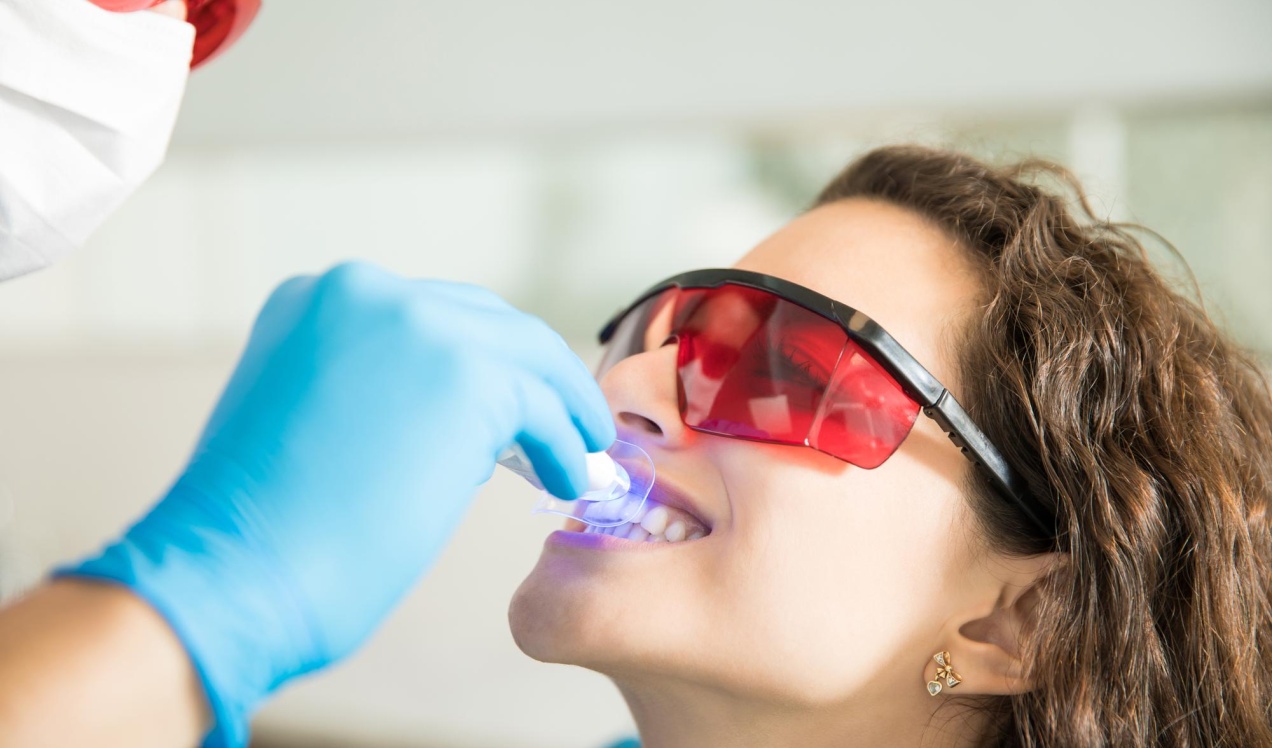
Choosing the right whitening option for your smile
A brighter smile is one of the most common goals patients bring up during dental appointments. But not every whitening option works the same way for every person. Your teeth, your lifestyle and your expectations all play a role in which approach will actually deliver the result you’re after. The two main paths are a professional take-home bleaching kit and in-chair whitening completed at the clinic.
The best fit depends on your timeline, budget, sensitivity levels, the type of staining you’re dealing with, and whether you have existing dental work like crowns, veneers or fillings. Professional guidance before you start makes whitening safer, more comfortable and more predictable. A consultation gives your dentist the chance to assess your teeth and recommend the method most likely to give you the outcome you want.
How teeth whitening works and why staining occurs
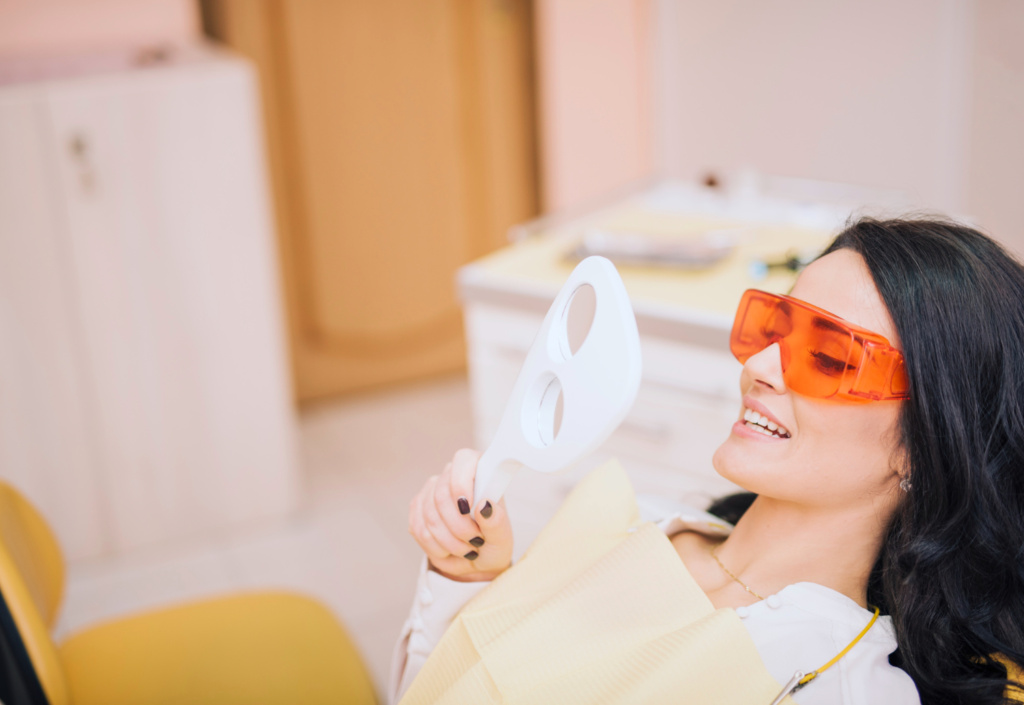
Whitening uses bleaching agents to lighten stains within natural tooth enamel. It’s different from a routine scale and clean, which removes plaque and surface buildup. Whitening targets the colour of the tooth itself. One thing to know upfront: whitening works on natural teeth only. It won’t change the shade of veneers, crowns, composite bonding or fillings.
Results vary between patients based on starting shade, enamel condition and the underlying cause of discolouration. Coffee, tea and red wine are common culprits. Smoking, vaping, ageing and natural enamel wear all contribute too. Some medications and past dental trauma can cause colour changes from within the tooth.
Surface stains from food and drink tend to respond well to whitening, while deeper internal discolouration may need a different cosmetic dentistry approach. Your dentist will assess whether the staining is extrinsic, sitting on the surface, or intrinsic, embedded within the tooth structure. This distinction shapes which whitening method is most likely to produce meaningful results for you.
Professional take-home whitening kits
A dentist-supplied take-home kit is quite different from a generic product off the shelf. Your dentist takes impressions or a digital scan to create custom-fitted trays, then provides professional-grade whitening gel with clear instructions for safe use. The typical process starts with a consultation to check suitability, followed by tray fitting and a straightforward routine you follow at home over an advised period.
It’s a convenient option if you prefer whitening in your own time, at your own pace, with gradual results building over days or weeks. The custom trays ensure the gel sits evenly against your teeth and stays off your gums, which reduces irritation and gives you more consistent coverage than a one-size-fits-all product.
Benefits of home whitening with a professional kit
- Gradual whitening that may suit people with mild sensitivity, allowing you to pause if discomfort arises
- Flexibility to whiten around work, family and other commitments without booking a clinic appointment
- Greater control over the pace of your treatment, so you can stop once you’re happy with the shade
- Custom trays improve gel contact and reduce mess compared with poorly fitting store-bought products
- A practical option for maintenance or touch-ups after in-chair whitening, extending the life of your results
Limitations of at-home whitening
Results aren’t immediate. You’ll need to be consistent with use and follow instructions carefully. Overuse or incorrect application can increase tooth sensitivity, cause gum irritation or produce uneven results. Not all stains respond equally well, and off-the-shelf kits don’t offer the same predictability as dentist-supplied trays.
Dramatic overnight changes aren’t how take-home kits work, so realistic expectations matter. Patients who skip days, leave the trays in too long, or apply too much gel tend to get less satisfying outcomes. The discipline of sticking to the recommended routine is part of what makes this approach work, and not everyone finds that easy to maintain over several weeks.
In-chair teeth whitening
In-chair whitening is a professional treatment completed under dental supervision, typically in a single appointment. Your dentist assesses your teeth first, protects your gums and soft tissues, then carefully applies a whitening gel. The team monitors your comfort throughout the session and can adjust the process if sensitivity develops. Because the entire treatment happens in a controlled clinical setting, there’s less room for error compared with self-applied products at home.
Benefits of in-chair whitening
- Noticeable improvement in a shorter timeframe, often a single visit lasting around 60 to 90 minutes
- Ideal if you’re preparing for a wedding, photo shoot, interview or special occasion with a fixed date
- Performed by dental professionals who can assess suitability and monitor safety in real time
- A controlled clinical setting reduces the user errors that often occur with home application
- Results tend to last longer than over-the-counter products, and can be paired with a take-home kit for ongoing maintenance
Limitations of in-chair whitening
The upfront cost is usually higher than a take-home kit. Some patients experience temporary sensitivity afterwards, and this tends to be more common with in-chair treatment because the gel concentration is stronger and the exposure time is more concentrated. Results still require maintenance, particularly if habits like coffee drinking or smoking continue. And if you have restorations on your front teeth, shade matching may need a broader cosmetic plan.
It’s also worth noting that a single session won’t always achieve the exact shade you’re hoping for, especially with heavily stained teeth. Your dentist will set realistic expectations during the initial assessment.
Comparing the two options side by side
Speed of results
In-chair whitening delivers faster visible changes, with most patients seeing a noticeable difference after a single appointment. At-home whitening works more gradually over days or weeks. If you have a deadline or event approaching, in-chair treatment gives you the most reliable timeline. Home whitening suits patients who aren’t in a rush and prefer to ease into the process at their own pace.
Convenience and flexibility
At-home whitening offers the most flexibility in timing, since you choose when and where to apply your trays. You can whiten while watching television, reading or getting ready for bed. In-chair treatment suits patients who prefer a single supervised appointment and want the process handled by a professional from start to finish.
Comfort and sensitivity
Both methods can cause temporary sensitivity. In-chair treatment has a higher incidence of post-treatment sensitivity because the gel concentration is stronger and exposure is faster. Gradual home whitening may suit some sensitive patients, while others feel more comfortable knowing a dentist is controlling the process and can respond to discomfort immediately. If you’ve had sensitivity with whitening products before, mention this during your consultation so your dentist can adjust the gel strength or recommend desensitising products.
Cost and value
In-chair whitening involves a higher initial investment. Home whitening may feel more budget-friendly depending on the treatment plan. But consider value over sticker price: in-chair results tend to be more predictable, longer-lasting and require fewer repeat purchases than over-the-counter products. A cheap pharmacy kit that produces minimal results and needs replacing every few months can end up costing more in the long run than a single professional treatment.
Predictability
Professionally guided treatment is more predictable than DIY methods. Clinical assessment, custom trays and controlled application improve both safety and consistency. Patients who skip the assessment stage and go straight to a store-bought product are more likely to end up with uneven results or sensitivity issues that could have been avoided.
Safety, DIY risks and maintaining your results
A dental check-up before whitening helps identify issues that could affect your comfort or results. Your dentist will look for decay, leaking fillings, gum inflammation, worn enamel and existing restorations. Whitening should be tailored to your situation, particularly if you have sensitivity or mixed dental work. Skipping this step is one of the most common mistakes patients make, particularly those who buy products online and start whitening without knowing whether their teeth are healthy enough for it.
Social media is full of whitening “hacks” that can do more harm than good. Charcoal products, lemon juice, excessive baking soda use and unregulated whitening products bought online can damage enamel or irritate gums. If you’re unsure about a product you’ve seen advertised, ask your dentist before trying it. The ingredients in unregulated products aren’t always listed accurately, and without knowing the concentration of active chemicals, you’re taking a risk with your enamel and soft tissue health.
Whitening results aren’t permanent. How long they last depends on your diet, smoking habits, oral hygiene and how often you consume staining food and drinks. In-chair results tend to hold up longer, especially when supported by occasional top-ups with a professional take-home kit. To help maintain your results: brush and floss consistently, keep up regular check-ups and cleans, rinse your mouth after staining drinks, and consider touch-up treatment if your dentist recommends it. If you’d like practical tips on caring for your smile between treatments, our guide on how to whiten your teeth safely covers the essentials. A take-home kit can also be useful for maintenance after professional teeth whitening in Gisborne.
Finding the right fit for your smile
If you want flexibility and gradual results, a professional take-home kit is a reasonable choice. If you want faster, stronger results with clinical oversight, in-chair whitening is the option we recommend most often. And for many patients, a combined approach gives you the best of both: an immediate improvement in the chair and an easy way to maintain it at home over time.
Whitening works well for many adults, but it’s not automatically suitable for everyone. It’s a good fit if you have healthy teeth and gums, common staining from food, drinks or ageing, and realistic expectations about the outcome. Caution or further assessment is needed if you have untreated decay, gum disease, cracked teeth, significant sensitivity, or if pregnancy is a consideration.
The right answer depends on your smile, your oral health and your personal preferences. Book a consultation with our Gisborne team, and we’ll help you work out which option fits your situation best. No pressure, no judgement, just clear and honest advice tailored to you.
Frequently asked questions about teeth whitening
Professional whitening, whether in-chair or with a dentist-supplied take-home kit, is safe when your teeth and gums are healthy. Your dentist checks for decay, gum disease and enamel wear before recommending treatment. Problems tend to arise when patients skip this step and use unregulated products with unknown concentrations of bleaching agents, which can cause chemical burns to gum tissue or weaken enamel over time.
This depends on your habits. Patients who drink coffee, tea or red wine regularly, or who smoke, will see their results fade faster. With good oral hygiene and occasional touch-ups using a professional take-home kit, most patients maintain their results for six months to two years. In-chair whitening tends to hold its shade longer than over-the-counter products because the treatment penetrates more deeply into the enamel.
No. Whitening gel only changes the shade of natural tooth enamel. Crowns, veneers, composite bonding and fillings won’t lighten. If you have restorations on visible teeth, whitening your natural teeth can create a mismatch. Your dentist will factor this in during your consultation and may suggest a broader cosmetic treatment plan to achieve a uniform result.
Sensitivity doesn’t automatically rule you out. A take-home kit with a lower-concentration gel, applied for shorter periods, is often a suitable starting point for patients prone to sensitivity. Your dentist can also recommend desensitising toothpaste or gel to use before and during treatment. The key is having a professional assess your teeth first rather than guessing with a store-bought product that you can’t adjust.
The two main differences are the trays and the gel. A dentist kit includes custom-fitted trays made from an impression or scan of your teeth, so the gel contacts your enamel evenly and stays off your gums. Pharmacy kits use generic trays that fit loosely, leading to uneven whitening and a higher risk of gum irritation. The professional gel is also formulated at a concentration your dentist has assessed as safe for your specific teeth.
For in-chair whitening, booking one to two weeks before your event gives you enough time for the appointment plus any short-term sensitivity to settle. If you’re using a take-home kit, allow three to four weeks so the gradual lightening process has time to reach the shade you want. Starting too late with a take-home kit is a common frustration, so planning ahead makes a real difference to your result.