

 Back to Blogs
A reassuring guide to your baby's first teeth
Most babies get their first tooth at around 6 months of age, but the normal window stretches from roughly 4 months to 12 months. If your little one is a bit ahead of schedule or taking their time, that’s rarely a cause for concern. Every child develops at their own pace, and genetics play a significant role in determining when that first tooth decides to make an appearance. Some families notice early teething runs in their lineage, while others find their babies are consistently later bloomers. Either way, the arrival of a first tooth is a milestone worth understanding so you can support your baby through the process with confidence and practical know-how.
This guide walks through the typical timeline for baby teeth, the order they tend to appear, how long teething symptoms can last, what to look out for, safe ways to offer comfort, and when it’s worth checking in with a dentist or GP. Whether you’re a first-time parent or you’ve been through teething before, having clear, reliable information helps you tell the difference between normal teething behaviour and signs that something else might be going on. Knowing what’s ahead also makes it easier to prepare simple comfort measures before your baby needs them.
When do babies get their first teeth?
The direct answer: around 6 months is the most common age for a first tooth to break through the gum. Some babies sprout a tooth as early as 4 months, while others won’t see one until closer to their first birthday. Both ends of that range are considered normal, and the timing alone tells you very little about your child’s overall health or development. In rare cases, a baby is born with a tooth already visible, known as a natal tooth, but this is uncommon and usually managed with straightforward advice from a dentist or paediatrician. The key thing to remember is that there’s no “right” age for the first tooth to show up.
Babies are actually born with all 20 primary teeth already forming beneath the gums. The lower front teeth, called the lower central incisors, are usually first to appear, followed closely by the upper front teeth. From there, teeth continue to emerge in a fairly predictable pattern, though your child’s timing won’t be identical to anyone else’s. You might notice a slight bump or whitening on the gum before the tooth cuts through, and some babies will drool more or chew on their hands in the days leading up to eruption. These early signs can help you prepare comfort measures before the tooth fully emerges.

What is the usual baby teeth timeline?
Typical age range for baby tooth eruption
Baby teeth generally come through between 6 months and 3 years. Most children have their full set of 20 primary teeth by around age 3. Teething happens in stages rather than all at once, which means you’ll notice teeth arriving in clusters over a long stretch of time. There are usually quiet periods between active eruptions where your baby won’t show any teething symptoms at all. The front teeth tend to come through faster and with less discomfort, while the back molars take longer and can cause more noticeable irritation. Understanding this staged pattern helps you anticipate what’s coming and respond calmly when a new round of teething begins.
The usual order baby teeth come in
- Lower central incisors: around 6 to 10 months
- Upper central incisors: around 8 to 12 months
- Upper lateral incisors: around 9 to 13 months
- Lower lateral incisors: around 10 to 16 months
- First molars: around 13 to 19 months
- Canines: around 16 to 23 months
- Second molars: around 23 to 33 months
These ranges are averages drawn from broad population data, so your child’s teeth don’t need to arrive in this exact order or timeframe to be developing well. Some babies get their upper teeth before their lower ones, and that’s perfectly fine. The sequence can also shift if one tooth is slightly slower to move through the gum while another catches up. If you’re keeping track, a simple note on your phone or in a baby book can help you monitor progress without unnecessary worry. Your dentist can confirm whether everything looks on track during routine visits.
Why timing can vary
Genetics, individual growth patterns, and simple biological variation all play a role in when teeth appear. If you or your partner were late teethers, your baby is more likely to follow the same pattern. Teeth don’t always follow a textbook sequence, and some babies breeze through teething with barely a grumble while others are noticeably uncomfortable for days at a time. Premature babies sometimes teethe later when adjusted for their corrected age, which is worth keeping in mind if your child was born early. Comparing your baby’s progress with another child is rarely helpful because the range of normal is so wide that two healthy babies of the same age can look very different in terms of dental development.
How long can teething last?
The short answer
Each individual tooth can cause symptoms for a few days before it pushes through the gum and sometimes a few days after. A single teething episode tends to last around 3 to 8 days. Because teeth erupt over months, though, teething can feel like a recurring on-and-off process from infancy through toddlerhood. Parents sometimes describe it as a rolling cycle of discomfort and relief, with some weeks being much harder than others. The cumulative effect can be tiring for both baby and parents, but knowing that each episode is temporary and self-limiting makes it easier to manage. Most parents find they get better at recognising the early signs and responding quickly as they gain experience with each new tooth.
The longer teething picture
Teething is not one continuous block of discomfort spanning two or three years. Symptoms come and go as different teeth move through the gums, and you’ll likely notice quiet stretches between active eruptions where your baby returns to their usual temperament. Molars tend to be more uncomfortable than front teeth because of their larger surface area, and sleep disruption or fussiness can flare up during those periods before settling again. The second molars, which arrive last, are often cited by parents as the most challenging round of teething. But even during difficult patches, the discomfort is manageable with simple measures, and each tooth only causes trouble for a short window before it settles into place.
Signs your baby may be teething
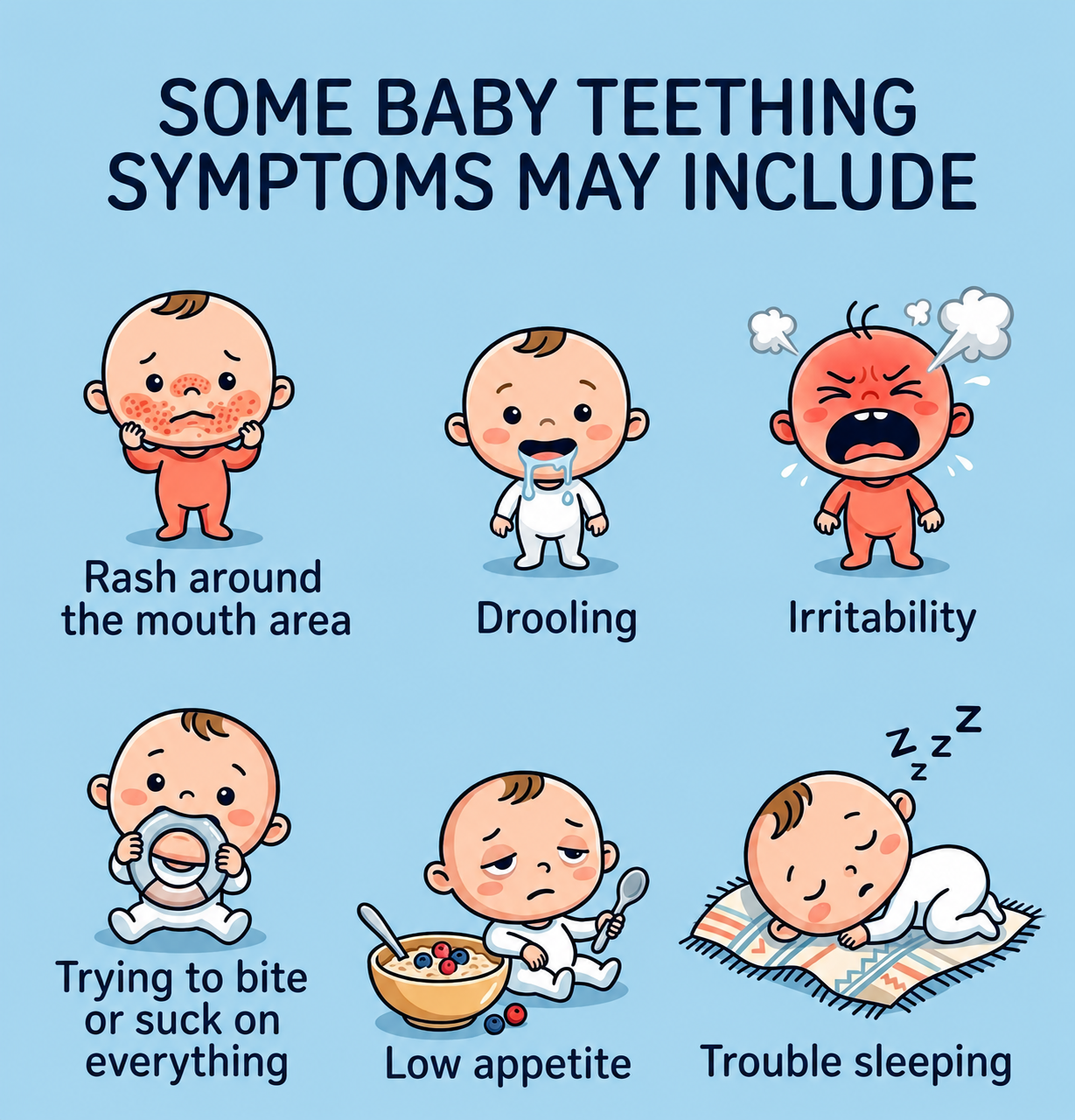
- Increased drooling
- Wanting to chew, bite, or gnaw on objects
- Sore, tender, red, or slightly swollen gums
- More fussiness or irritability than usual
- Changes in sleep patterns
- Rubbing the gums, cheeks, or ears
- Mild feeding changes linked to gum discomfort
A mild rise in temperature can occur during teething, but a true fever above 38°C shouldn’t be assumed to be caused by a new tooth coming through. Not every baby shows every sign on this list, and some sail through with very few symptoms at all. The signs also overlap with other common infant issues like ear infections, colds, and general developmental fussiness, so it’s worth paying attention to the full picture rather than attributing everything to teething. If your baby has a visible bump on the gum or you can feel the edge of a tooth just beneath the surface, that’s a more reliable indicator than behavioural changes alone.
What teething usually does not cause
High fever, vomiting, ongoing diarrhoea, persistent cough, significant rash beyond mild drool irritation around the mouth, and marked lethargy are not typical teething symptoms. These signs point to illness rather than tooth eruption, and delaying medical advice because you assume it’s “just teething” can mean a real infection or condition goes unaddressed. If your baby seems genuinely unwell, isn’t feeding well, or symptoms are severe or ongoing, seek medical advice promptly. It’s always better to check and be reassured than to wait and wonder, particularly with young babies whose conditions can change quickly.

Safe ways to soothe teething babies at home
Offer a clean, chilled teething ring that has been cooled in the fridge rather than frozen, as freezing makes it too hard and can bruise sensitive gums. Gently rubbing the gums with a clean finger or a cool, damp cloth can also provide relief by applying light counter-pressure to the area where the tooth is pushing through. Extra cuddles and reassurance go a long way during unsettled periods, and sometimes simply holding your baby or offering a feed is the most effective comfort. Keep the face and chin dry to reduce drool rash, and offer age-appropriate distraction when your baby is restless. Cold fruit in a mesh feeder can work well for older babies who have started solids, giving them something safe to gnaw on while the cold soothes the gums.
Tips for drooling and skin irritation
Pat the skin dry gently rather than rubbing, as the skin around a teething baby’s mouth and chin becomes sensitive from constant moisture. Use soft bibs and change them frequently throughout the day so the fabric next to the skin stays dry. A simple barrier cream around the mouth and chin can help if the skin is becoming red or irritated, and petroleum-based products or those designed for nappy rash tend to work well for this purpose. Keeping the area clean and dry makes the biggest difference, and most drool rash clears up on its own once the active teething phase passes and saliva production reduces.a
What to avoid
• Amber teething necklaces or bracelets, which carry choking and strangulation risks with no proven benefit
• Teething items filled with liquid that can leak or break
• Very hard frozen objects that could bruise the gums
• Topical numbing gels or products without professional advice, as some contain ingredients unsuitable for young children
• Sweet foods or drinks offered for comfort, as these increase decay risk once teeth appear
Start cleaning as soon as the first tooth appears
Baby teeth matter more than people sometimes realise. They help with eating, speech development, jaw growth, and holding space for adult teeth that will arrive years later. If a baby tooth is lost early due to decay, the surrounding teeth can shift into the gap and create crowding problems when permanent teeth try to come through. Begin cleaning as soon as that first tooth emerges using a soft infant toothbrush and a tiny smear of age-appropriate fluoride toothpaste. Brushing twice a day, especially before bed, sets a strong foundation for lifelong oral health. For more detail on cleaning teeth properly, we have a separate guide worth reading.
Build healthy habits early
Keep it simple and consistent. Limit frequent sugary foods and drinks, and avoid putting baby to bed with a bottle unless it contains water, because milk or juice pooling around the teeth overnight is one of the most common causes of early childhood decay. Making brushing part of the daily routine from the start helps it feel normal rather than a battle, and letting your baby watch you brush your own teeth reinforces the habit through imitation. Once teeth begin touching each other, you can introduce gentle flossing to clean the surfaces a toothbrush can’t reach. These small, consistent steps add up to a meaningful difference in your child’s dental health over time.
When should your baby first see the dentist?
Book your baby’s first dental visit when the first tooth appears or by their first birthday, whichever comes first. Early visits are about checking development, spotting early signs of decay, and giving parents practical advice on brushing and feeding habits that protect teeth as they come through. They’re gentle, supportive, and focused on prevention rather than treatment. The dentist will look at the teeth and gums, check for any concerns, and answer your questions about fluoride, diet, and oral care routines. You can read more about when to take your child for their first dental visit for a fuller picture of what to expect.
Our children’s dentistry team is experienced in making first appointments relaxed and positive for both child and parent. These early visits help your child build a comfortable association with the dental environment, which pays off as they grow and need more involved care. There’s no judgement, just practical guidance to help your child’s smile get off to a healthy start.
When to seek professional advice about teething or tooth development
Speak with a dentist if
• No teeth have appeared by around 12 to 18 months and you’re concerned
• Teeth seem to be erupting in an unusual way or in a position that looks off
• You notice signs of decay, discolouration, or damage to erupted teeth
• Feeding difficulties seem linked to oral discomfort that isn’t resolving
• You’d like help with brushing technique, fluoride advice, or oral care routines
Speak with a GP or health professional if
• There is a high fever or the baby seems unwell beyond mild fussiness
• Vomiting, diarrhoea, persistent cough, or dehydration are present
• Ear pulling is ongoing and could point to an ear infection rather than teething
• Your baby is refusing feeds or showing signs of significant pain that comfort measures aren’t helping
A calm takeaway for parents
Most babies get their first teeth around 6 months, but there’s a broad range of normal that extends well past that mark. Teething usually comes in waves, with each tooth causing short periods of discomfort rather than constant pain, and quiet stretches in between where your baby feels like themselves again. Baby teeth deserve care from the moment they appear, and building simple habits early, like twice-daily brushing and limiting sugary snacks, makes a real difference to your child’s oral health as they grow. The process of teething can feel long when you’re in the middle of it, but each phase passes, and before you know it, your toddler will have a full set of 20 teeth.
If you have questions about your child’s teething or you’d like to book their first check-up and clean, our team at Gisborne Family Dental is here to help. We’re always happy to chat through any concerns about timing, tooth development, or oral care routines, and we make sure appointments for little ones are relaxed and low-pressure. Getting your child comfortable with dental visits early is one of the best things you can do for their long-term dental health, and it gives you a trusted source of advice as new teeth continue to arrive over the coming years.
Frequently asked questions about baby teeth
Most babies get their first tooth at around 6 months, but the normal range spans from about 4 months to 12 months. The lower central incisors are typically the first to appear. If your baby hasn’t cut a tooth by 12 months, there’s usually no cause for alarm, but it’s worth mentioning at their next dental or GP appointment if no teeth have appeared by 18 months.
A single tooth tends to cause symptoms for around 3 to 8 days, starting a few days before it breaks through the gum and settling shortly after. The overall teething process stretches from around 6 months to age 3 as all 20 primary teeth come through, but it’s not continuous discomfort. There are quiet stretches between active eruptions where your baby won’t show teething signs at all.
Yes. Some babies sprout a tooth at 4 months, while others don’t see one until close to their first birthday. Genetics are the biggest factor, so if you or your partner teethed early or late, your child is likely to follow a similar pattern. The timing of the first tooth doesn’t indicate anything about your baby’s overall health or development.
Teething can cause a slight rise in temperature, but it shouldn’t cause a true fever above 38°C. If your baby has a high temperature, is lethargic, or seems unwell, those symptoms are more likely caused by an illness that needs attention from a GP rather than a new tooth coming through.
Start as soon as the first tooth appears. Use a soft infant toothbrush with a rice-grain-sized smear of age-appropriate fluoride toothpaste, and brush twice a day, especially before bed. This early routine protects the teeth from decay and helps your baby get used to having their teeth cleaned, making it easier as more teeth arrive.